
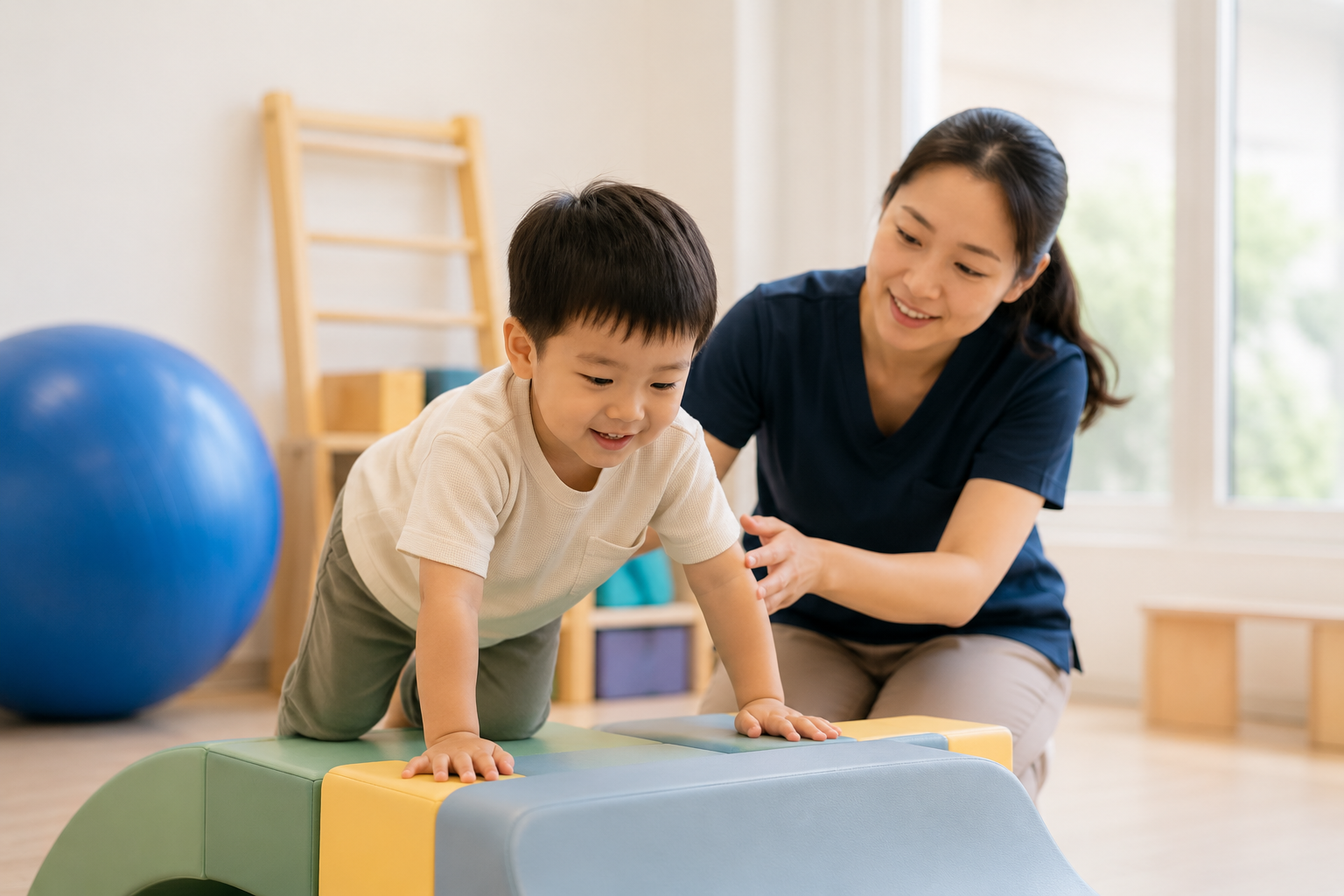
Occupational Therapy for Children: Boost Growth, Skills & Independence
Key Takeaways
- Many children have trouble developing at the same pace as others. They need extra support with daily activities like playing, learning and connecting with peers.
- Occupational therapy for children focuses on helping them develop the ability to engage in what they want, need, or have to do to live a happy, healthy life. This means focusing on the everyday activities that define childhood, such as play, learning, and making friends, to build the skills necessary for their daily success.
- Addressing developmental delays through early intervention is a proven, evidence-based approach. Providing support at a younger age helps children build foundational skills, which may better prepare them for the demands of school and their daily activities.
- The occupational therapy sessions can often look liken playing games and doing fun tasks that are actually therapeutic activities just right for each child to develop their ability. The therapeutic activities help kids get better at doing what is important to them in a gentle and supportive way.
- The good thingthings about occupational therapy for kids is that it doesn;t end when they leave the clinic. Simple take-hometake home therapy “homework” can be done at home to help strengthen what they’ve learned, making occupational therapy even more effective over time.
Introduction
Children develop at different speeds. When you observe a child’s growth, you see how each one learns and develops differently. As a child develops, you may notice they require support. This support may look different for everyone. The important thing is to know when and how to support your child. Recent data in Malaysia shows that many kids may need help to build everyday skills. A 2026 study based on the National Health and Morbidity Survey 2022 found that 7.4% of Malaysian children aged 6–59 months had developmental delays, more than double the what was previously reported in 2016 this shows a recent notable increase in developmental challenges among young children. Cognitive delays (4.1%) were the most common, followed by language (2.7%), fine motor (1.9%), and gross motor delays (1.0%). These delays are most commonly addressed by occupational therapy. These challenges can affect a child’s routines, learning and social interaction. By providing them the support they need early, parents can help their child develop the skills to be confident and live independently. As children grow, they need guidance to build confidence and learn to manage daily activities on their own.
How Occupational Therapy Supports Early Development?
Today, kids face demands academically, socially, and emotionally. Some kids may have gaps in their development. That’s where occupational therapy for kids can help. Occupational therapy helps children develop skills for activities. These skills include:- Fine motor skills, like writing and buttoning clothes
- Gross motor skills, like running and balancing
- Sensory processing, like responding to sounds and textures
- Cognitive skills, like attention, memory and problem-solving
What Happens During an Occupational Therapy Session?
Parents often wonder what a typical occupational therapy session is like. An occupational therapy session is not like a classroom. It is interactive, made just for each child. Here is what a session may include:- Play activities to help with coordination, cognition, social skills.
- Fine motor practice to get ready for writing, drawing, and many other daily tasks.
- Sensory tasks using swings or different textures to improve their processing and regulation.
- Guided routine building to help children develop routines like getting dressed or eating
What are the Benefits that Extend Beyond the Clinic?
The impact of occupational therapy for kids goes far beyond the sessions itself. It influences how kids function in life. Here is what families usually see after some time:- Independence: Kids become more confident when they dress, eat and follow their routines.
- Focus: Kids can pay attention for a longer time when they do schoolwork.
- Coordination: Kids can write, draw and play sports better.
- Regulation: Kids can deal with feeling frustrated and with changes better.
Different Things Parents Can Do at Home
Misconceptions often make parents uncertain about how to support their child’s progress. Occupational therapy extends beyond the clinic, as parents play a key role in helping their child continue developing at home. When parents regularly practice recommended activities at home, they often notice steady improvement and help their child develop the skills to be self-assured and independent. Here are a few ideas:- Providing opportunities for children to practise age-appropriate self-care skills, such as dressing or feeding themselves.
- Encouraging play-based activities that support fine and gross motor development, including puzzles, building activities, drawing, and active play.
- Establishing consistent daily routines where appropriate, such as regular meal, sleep, and activity schedules.
- Supporting a balanced range of activities, including active play, social interaction, and appropriate screen use based on the child’s age and needs.
- Working with therapists to identify strategies that are tailored to the child’s developmental goals and the family’s circumstances.
Addressing Common Misconceptions
There are still some misunderstandings about occupational therapy that may stop parents from seeking help, and they are:- “My child will outgrow the issue.”
- “Occupational therapy is for severe conditions.”
- “It’s the same as physiotherapy.”
Conclusion
Every child learns, grows, and develops in their own unique way. While some children naturally pick up everyday skills, others may need a little extra support with things like coordination, focus, communication, sensory processing, or daily routines. Early support can make a meaningful difference in helping children feel more confident, independent, and prepared for school and everyday life.
At Baseline Health, our child-centred and play-based occupational therapists are experts at providing personalised and supportive care designed around your child’s individual needs. Through engaging, play-based activities and structured guidance, we help children strengthen important life skills in a safe and encouraging environment.
Our team works closely with parents to ensure progress continues beyond the clinic by sharing practical strategies and activities that can be practised at home. By improving fine motor skills, attention, coordination, and daily living skills, we help children thrive both emotionally and physically.
Contact us at +6017-847-4833 or enquiries@baselinehealthgroup.com.
Baseline Health A-G-03A & A-G-05 Plaza, Kelana Jaya Boulevard, SS 7, 47301 Petaling Jaya, Selangor.
Our team is here to explain how our personalised occupational therapy programmes can help your child build confidence, develop essential life skills, and reach their full potential.