
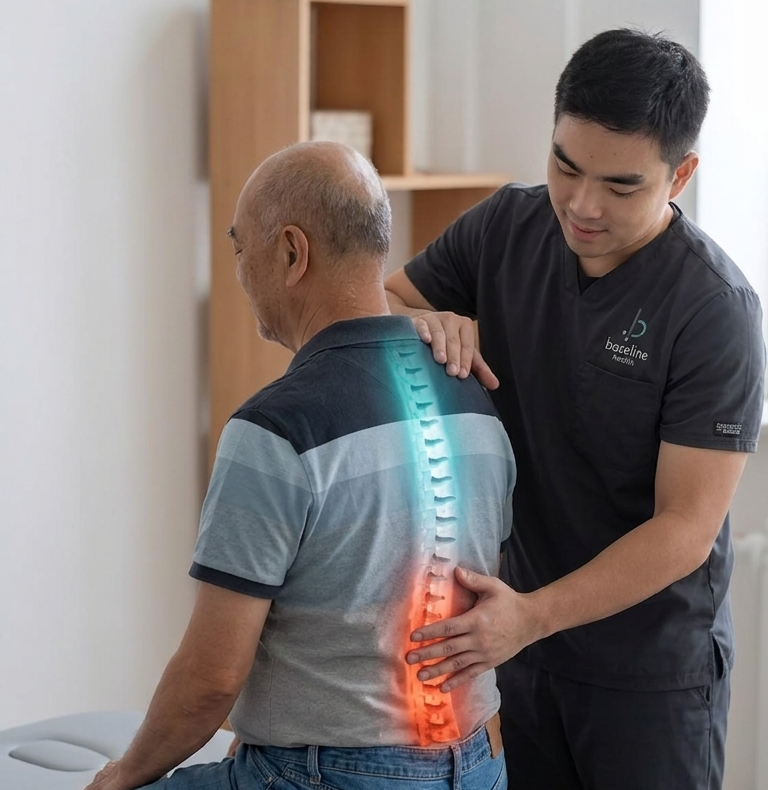
Scoliosis Care
Managing the further progression of spinal curvatures.
What Is Scoliosis Specific Integrated Exercise (SSIE)?
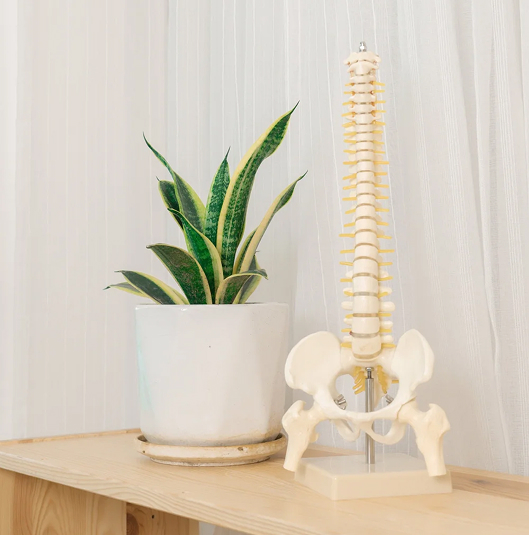
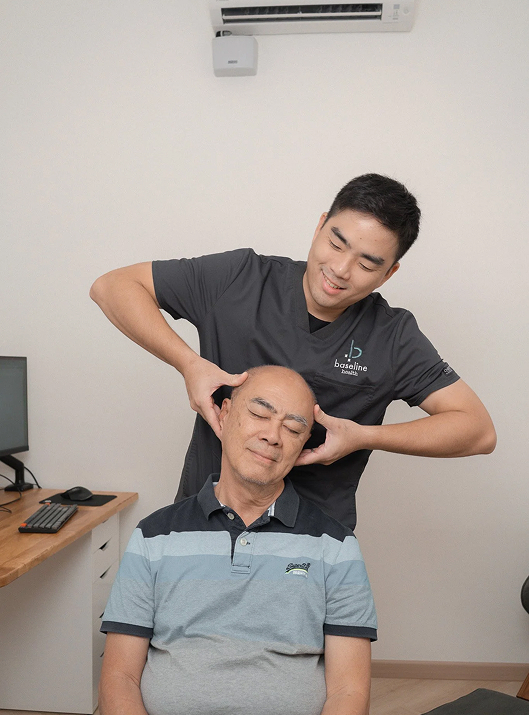
When managing scoliosis conditions at Baseline Health, our physiotherapists employ the Schroth Method, an evidence-based approach for treating scoliosis. This method combines various forms of exercise and has been shown to effectively manage the further progression of spinal curvatures.
Schroth Method Principles
The Schroth Method emphasises:
- Active spinal correction
- Breathing techniques
- Spinal elongation
- Pelvic alignment
- Side-shift movements
- Core stabilisation
- Isometric muscular contractions
Scoliosis is often described as a side-to-side curve, but it is actually a three-dimensional change in the spine’s alignment. Beyond a simple lateral shift, the condition involves the spine twisting or tilting across multiple planes, affecting how the body carries itself.
While it can develop at any stage, scoliosis is most commonly identified in adolescents between the ages of 10 and 18, particularly in girls.
Understanding these changes early is the best way to protect spinal health and ensure the body stays balanced and active for years to come.
Scoliosis Care is Suitable for:

Adolescents with diagnosed scoliosis

Adults managing spinal curves
Individuals experiencing postural imbalance

People with discomfort linked to curvature
At Baseline Health, our physiotherapists use evidence-based approaches tailored to each person’s unique needs. We believe that effective recovery starts with a clear diagnosis, which is why we help patients fully understand their condition through a comprehensive assessment involving physical examinations, X-ray imaging, and postural photography.
By combining these insights, we create a complete map of your health. This ensures your treatment plan is built on a foundation of accuracy and results, moving you toward a more effective recovery.

Collaborative Care
Physiotherapists often collaborate with:
- Medical doctors, for diagnosis and referrals
- Occupational therapists, to support return-to-work or daily activities
- Chiropractors, to ensure joint alignment complements muscle rehabilitation
- Trainers or coaches, to transition clients into fitness safely

