Clinical Pilates or Regular Pilates: Which Fits Your Body Better?
Key Takeaway
- Clinical Pilates is practitioner-guided and built around your individual movement assessment. A regular Pilates class follows a general sequence for a mixed group.
- The difference is not the equipment or the setting. It is what the person running the session is trained to see and respond to.
- Pilates, in either format, has solid research behind its effects on posture control, spinal stability, and body alignment.
- If you have a history of injury or recurring pain, a supervised assessment-based programme is the safer starting point.
- At Baseline Health, every clinical Pilates session is built from a movement assessment specific to you, not a class template.
Introduction
So you want to try Pilates. You look up classes near you and find studio sessions, reformer classes, and something called clinical Pilates. They all sound like variations of the same thing, but they work quite differently. The one you choose determines who watches you move and whether the programme fits your body or a general group. For some people, a regular class is the perfect fit. For others, it is the wrong starting point. Here is how to tell the difference.
What Actually Happens in a Regular Pilates Class
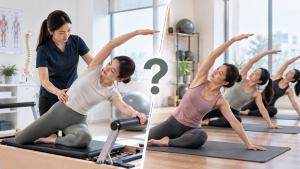
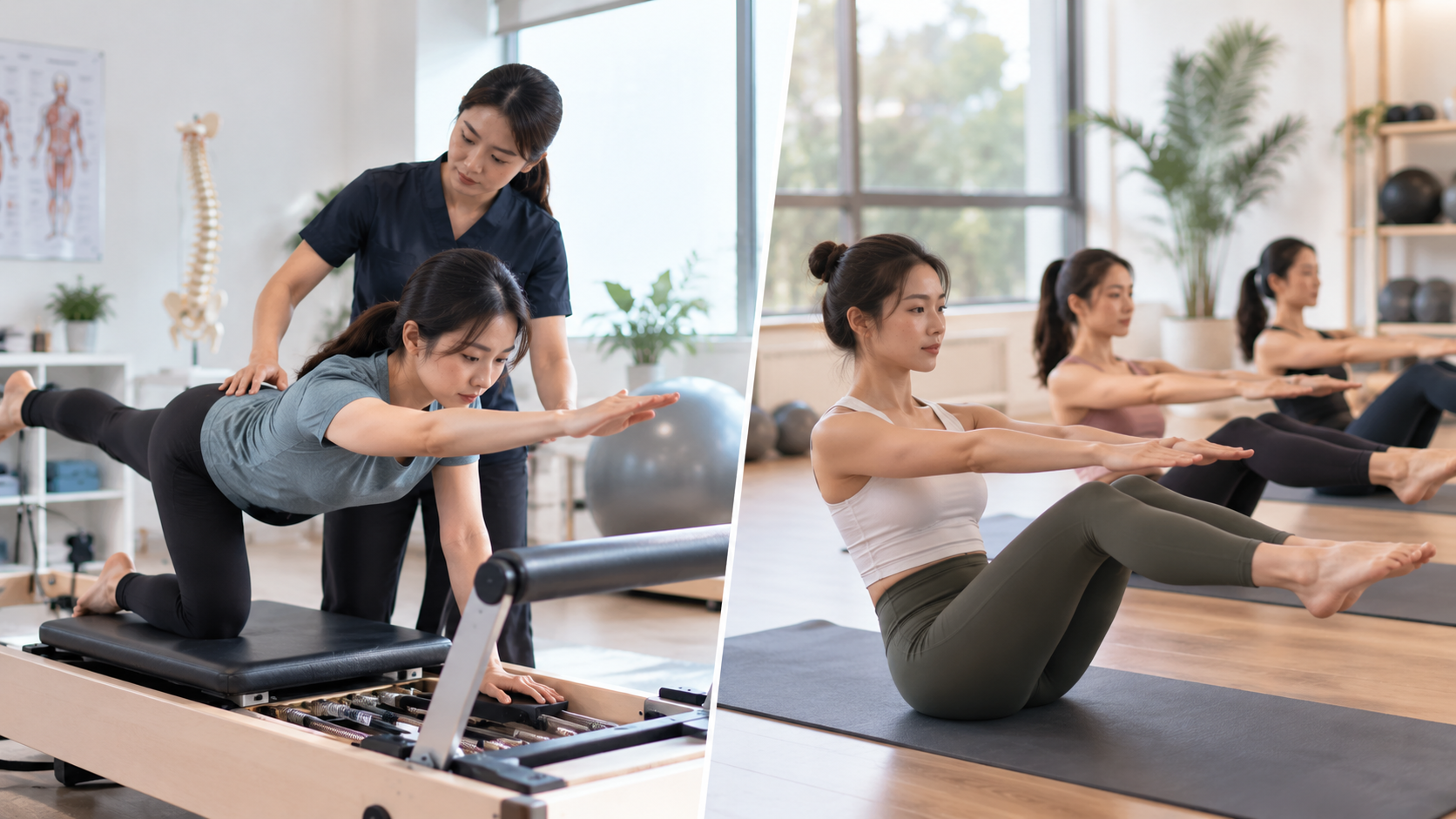
Think of a regular class as a really solid group workout with a Pilates focus. The instructor holds a Pilates fitness certification, leads a planned exercise sequence, and keeps an eye on the room. A good one will offer easier variations and spot the obvious issues. For someone generally healthy who wants to move better and build core strength, it is honestly a great option. The main thing to know going in is that the session is built for the group, not for you specifically. The instructor is not reviewing how your particular body moves before you arrive. They are teaching a class, and you happen to be in it.What Makes Clinical Pilates Different
Clinical Pilates is delivered by a practitioner with clinical training, most commonly a physiotherapist with advanced Pilates certification. That combination changes the whole shape of the experience, from the very first session onwards. Before your first session, you go through a movement assessment. The practitioner checks how you move, where your range is limited, and whether any habits create risk. The programme that follows is built on those findings. During each session, the practitioner watches how your body responds and adjusts as you go. If an exercise is creating a pattern that should not be there, it gets changed. If one area is progressing faster than another, the plan shifts accordingly. “A clinical session adjusts to what your body is actually doing on the day. A group class cannot do that.” At Baseline Health, the clinical Pilates programme works exactly this way. The difference from a studio class is not the reformer or the equipment. It is the clinical thinking behind every movement choice.The Instructor Gap: Why It Changes Everything
Here is the bit that tends to get left out of most comparisons. A fitness-certified Pilates instructor is trained to teach Pilates to healthy people. They know the exercises, the progressions, and how to keep a class moving well. That is real expertise, and for a lot of people it is exactly what they need. A physiotherapist with this training can spot problems, identify risk, and build around undiagnosed conditions. They are also trained to recognise warning signs during a session. An instructor in a regular class might spot that your form looks off. But figuring out whether it reflects something deeper, or whether pushing through could make things worse, goes beyond fitness training. In a supervised clinical session, that is exactly what gets examined. Supervised Pilates with individual assessment tends to produce more consistent results for people with movement or injury-related needs. This is not a criticism of regular classes. It simply reflects what each format was designed to do. “Knowing what is wrong is different from knowing what to do about it. Clinical training covers both.”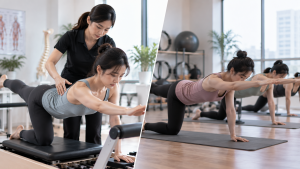
Pilates and Posture Control: What the Research Shows
One area where Pilates consistently shows up well in the research is posture control. And this is not just about standing up straight. It covers how the spine aligns under load and the endurance that keeps good posture sustainable through a full day. A systematic review found Pilates positively affects spinal alignment and postural control across a range of ages. Both mat and equipment-based approaches showed meaningful improvements. Where the two formats differ is in how targeted those improvements actually are. A regular pilates class builds general postural strength across the group. A clinical assessment finds the specific imbalances that are driving your particular posture issue and builds the programme around those. If your posture issue has a specific driver, and most do, a targeted approach gets further than a general one.Which Format Fits Your Situation
| Your Situation | Better Fit | Why |
| Generally healthy, no injury history, building fitness and body awareness | Regular group class | A well-run class builds core strength, flexibility, and postural awareness for healthy adults |
| Desk worker with postural tightness and no formal diagnosis | Clinical Pilates | Assessment picks up movement compensations before they become painful; the programme targets them directly |
| History of back injury, recurring pain, or previous surgery | Clinical Pilates | A practitioner screens for what can and cannot be done and builds the programme around your movement history |
| Currently managing a condition alongside other treatment | Supervised programme | Exercises are chosen to work with your treatment plan, not around it |